Decorating Floating Shelves for Christmas Without Exceeding Their Weight Limit
October 08, 2026 - Home Decor
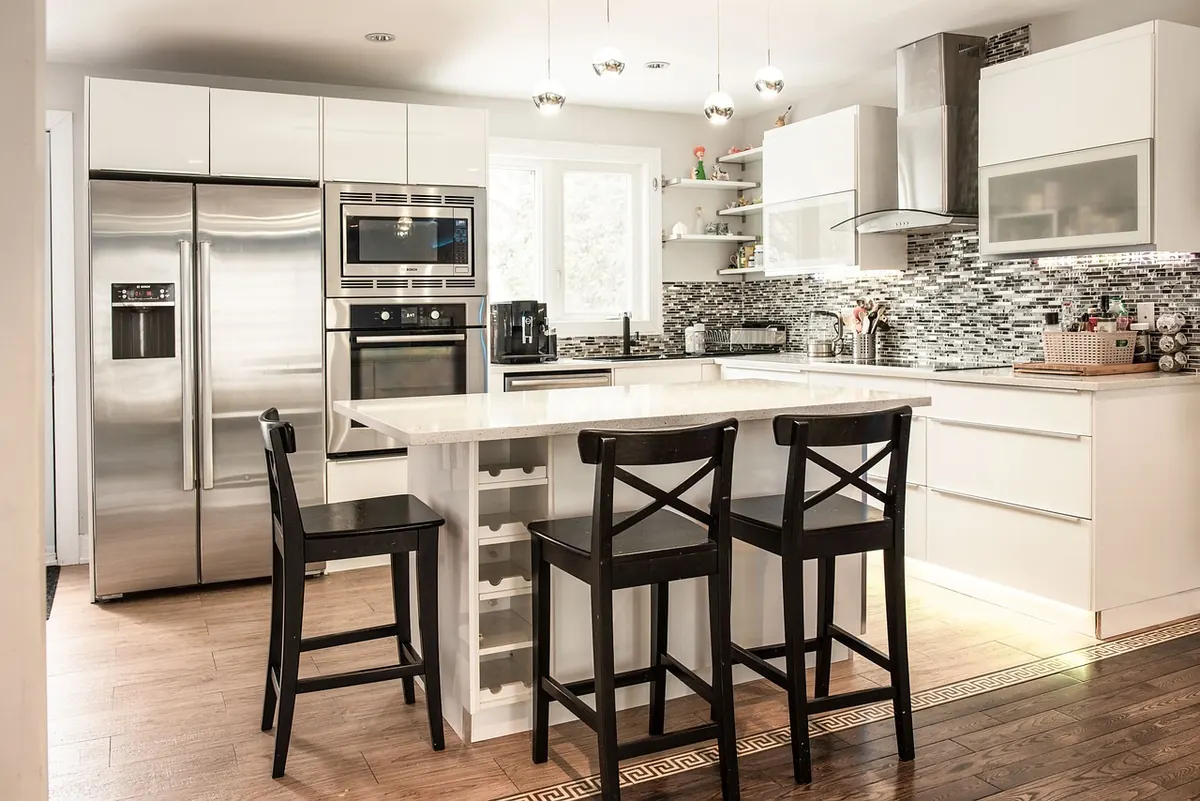
A small kitchen rarely gives you a straight answer. You have two metres of wall, one awkward corner, and a decision that quietly shapes how the room feels every morning: doors, or no doors? Open shelving and closed cabinets are not competing styles so much as different habits. One rewards daily tidiness; the other forgives mess and buys you calm. Which suits you depends on how you cook, how often you clean, and how much visual noise you can live with before a room starts to feel cramped.
The strongest argument against open shelves is not aesthetic. It is cleaning.
Every time you fry, roast or boil something, the air carries fat and moisture around the room. An extractor helps, but it never catches everything, and a thin film of grease settles on every horizontal surface — including the shelf holding your mugs. Grease then traps dust, and together they form a tacky grey layer that a quick flick with a cloth will not shift.
Placement changes how often you pay that price. A shelf within half a metre of the hob may need wiping weekly and a full clean monthly. A shelf on the opposite wall, above the kettle and toaster, can go a couple of months between proper washes.
What you put there matters too. Oils and ground spices keep better in the dark; light and warmth speed their decline. Dark glass jars help a little. A cupboard helps more.
And remember what a proper clean involves: taking every jar, tin and bowl off the shelf, washing the shelf, washing the jars, drying both, then restacking. That is fifteen or twenty minutes. Doors spare you all of it.
Doors do three jobs at once. They hide clutter, they block light and dust, and they let you store things that are not pleasant to look at — mismatched plastic containers, half-used packets of pasta, the tin of beans you bought by mistake.
They also add constraints. A cupboard door needs clearance to open, usually 40 to 45cm, which is a real problem in a narrow galley where two people already pass each other sideways. Deep cupboards swallow items at the back; the front row gets used, the back row gets forgotten until it expires. Base corner units are worse still.
Open shelving wins one argument clearly. A mug on a shelf takes one movement; a mug behind a door takes three. For items used weekly, that difference means nothing. For salt, oil, tea, mugs and your most-used pan, it is the difference between a kitchen that flows and one that niggles.
A useful test: count anything you reach for more than twice a day. Those items belong on an open shelf or the worktop, however the rest of the kitchen is arranged.
Often yes, but not automatically. Open shelving removes the visual weight of a wall of doors and lets the eye travel to the back wall, which reads as depth. It works best when the contents are calm: fewer colours, consistent containers, generous gaps between objects. Three neat stacks of white plates look restful. A shelf crammed with cereal boxes, odd jars and a novelty mug looks exactly like that.
Closed cabinets give you an unbroken plane. That can feel heavier, particularly in dark colours, but it is also quieter — and a quiet room often feels larger than a busy one. If you want the calm without the bulk, pale fronts, handleless doors and a plain splashback do a lot of the work.
The practical answer is rarely all-or-nothing. A common split: closed base units for everything heavy, dusty or ugly, plus one or two open shelves at eye level for the things you use daily and enjoy looking at. Mount shelves so the underside sits about 45 to 50cm above the worktop — high enough to work under, low enough to reach — and keep them 25 to 30cm deep. Deeper than that and you will lose things at the back.
Before you commit to a change, run a trial. Empty one upper cupboard, stack its contents on a temporary shelf or on the worktop for three weeks, and see how you feel about it.
If the shelf stays tidy and the cleaning barely registers, open shelving will work for you. If you find yourself hiding things behind the microwave, keep the doors and spend your budget on better internal storage instead — pull-out baskets, a shelf riser, a drawer divider. In a small kitchen, that is usually money better spent than a change of style.
Photo: ottawagraphics / Pixabay
How to decorate floating shelves for Christmas safely: check the fixings, estimate a rough load per shelf, and...
How to fit slim, practical shelving into UK Victorian flats — measuring awkward alcoves, narrow hallways, low...
Copyright © 2026 Mesa Shelf. All Right Reserved.